
“I was incapable of articulating the pain I was in, especially because ‘my dreams were coming true,’ or at least that is what I was being told.” – pg. 9
“If they were a character in a screenplay the first note would be, ‘too much.'” – pg. 57
“We do not realize the extent of the energy we are losing until we find where it is seeping from.” – pg. 134
“Someone will break your heart but you will break one too.” – pg. 141
Author: Kelsey Mihachik
Todd Walsh’s Coyotes Tribute
Link to video here.
“I wrote once that a good story lasts forever. However, sometimes the ending just isn’t what you want it to be. It is up to us to figure out the joy of the story, no matter how it ended. That’s why we want to read and feel more of them. That’s why people continue to write.
What I said earlier, I’ll always remember: If you’re good to the game, the game will be good to you. So in closing, I’m gonna go back to a story that I love to tell. It’s about the Hall of Fame coach, the late-great Fred Shero, back in the mid-70s. […] He walked into the room before the Stanley Cup clinching game, and he walked up to the chalkboard and he wrote this – it’s my favorite quote in all of hockey: Win today, and we walk together forever.”
The New One, by Mike Birbiglia
“People with children don’t know how to tell stories. That’s not a story. […] At best, [what you said is] a middle. It’s a middle where you’re thinking, ‘Get to the end!’ But there is no end. Or beginning. It’s just this constant flow of ‘middle.'” – pg. 6
“Therein lies the risk and reward of jokes. We joke about things we are most anxious about to diffuse the anxiety of the actual threat. […] Jokes that touch on the most painful topics can often bring the deepest laughs and the most healing.” – pg. 70
“If you ever meet someone who you know doesn’t really care about meeting you: Tell them a secret.” – pg. 75
“I lived in this town where everyone was pretending to be happy and pretending to be in a good marriage and pretending they had a nice house with a nice living room.” – pg. 141
“A joke without comedic timing is a statement of pure insanity.” – pg. 213
“When I got older it started to occur to me that some people are just filled with existential dread, and maybe I’m one of those people too.” – pg. 230
“The truth is often uncomfortable.” – pg. 239
“I’ve been so busy, I forgot to be secret.” – J. Hope Stein, pg. 239
Leslie F*cking Jones, by Leslie Jones
“You have to go through shit to really connect to your material, or have a point of view.” – pg. xiii
“You’ve got to learn to play like you practice. That’s true for anything in your life.” – pg 39
“It’s a cold world without your parents, the two people who unconditionally love you.” – pg. 58
“A good comedian should be able to relate to the audience and talk about things in a natural way.” – pg. 81
“You get to be many things in life, even when you are in between.” – pg. 103
“You have to have a purpose, something to do. […] When you’ve got too much time on your hands you end up obsessing over little bullshit.” – pg. 105
“If you can carry yourself properly and show the world that you won’t be fucked with, you probably won’t ever have to fight.” – pg. 107
“The only way to like yourself and truly know yourself is, I believe, through something bigger than you.” – pg. 125
“It’s amazing when you finally realize that God is not surprised by who you are.” – pg. 127
“I couldn’t just be funny – I had to work this craft.” – pg. 133
“I had great ideas, I just had not learned how to sell them.” – pg. 196
“You either believe in yourself or you don’t. I’m not desperate; I have a talent. And I’m a business.” – pg. 205
“Mixing things up helps me get outside of myself.” – pg. 237
“You are gonna fail. But failing helps you recognize success. Failure is not bad, but I’m also not glamorizing it. I’m glamorizing growing.” – pg. 246
“Work to be you. Find out where you really fit.” – pg. 266
We’re Gonna Jump Start Second Grade
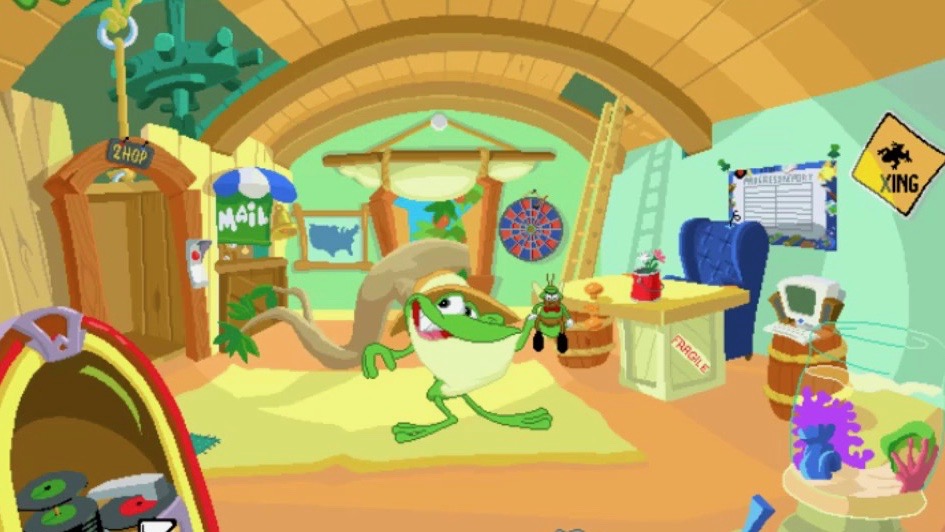
Do you think people enjoy teaching for the selfless aspect of making a difference in someone else’s day/life, or do you think they just want to be seen as someone who teaches? I always wonder this about the grade school teachers who go around boasting their cute outfits. Like, are you a teacher because you love kids and you find solace in helping to shape America’s tomorrow, or are you just doing it so you can be the hot teacher and gain the unconditional adoration of 9 year-olds.
When I was in first grade, I played the computer game Jump Start Second Grade. Please ignore the fact that I was batting above my intelligence level for the sake of this story. Well, it’s not really a story. But back then, I’m not quite sure if Microsoft Word was a thing yet. Or if it was, I was in first grade and my parents wouldn’t have known what the fuck that was. So in this computer game, there was a, uh, computer… in the game. You could click on the computer and start typing a letter: complete with a print button.
Anyways, at the time I thought that the only person who really believed in me and my academic potential was my teacher, Mrs. Sedgley. So I would creepily write her letters, print them, and then send them to her home address – which I looked up in a phone book. See? Unconditional adoration.
I never got any response. To be honest, I don’t really know why my mom let me do that: send letters to another person’s home residence. Now that I’m thinking about it, I can’t imagine why my mom would waste money on the postage stamps. But hey, maybe they did all get sent to Mrs. Sedgley’s house, and she just wrote me off as some weird stalker student. That’s right: she wrote me off AND she didn’t write back. I mean, it wasn’t like I was really talking about much besides which friends I recently hung out with, or maybe that I got a new pet Beta fish.
My point is: did Mrs. Sedgley really enjoy enlightening the youth, or did she just enjoy receiving my countless letters as a form of self-worth? You should really think about where your motivation lies the next time you want to become an instructor at some capacity.
Not That Kind of Girl, by Lena Dunham
“I want to tell my stories and, more than that, I have to in order to stay sane.” – pg. xviii
“I am a girl with a keen interest in having it all.” – pg. xix
“It wasn’t always easy to live inside my brain, but I had a family that loved me.” – pg. 46
“The end never comes when you think it will. It’s always ten steps past the worst moment, then a weird turn to the left.” – pg. 48
“Emotions are exhausting to have.” – pg. 65
“I don’t love any of my old boyfriends anymore. I’m not sure I ever did.” – pg. 77
“There’s a certain grace to having your heart broken.” – pg. 144
“Ambition is a funny thing: it creeps in when you least expect it and keeps you moving.” – pg. 185
“Treat people the way you want to be described on their blog.” – pg. 264
Everything is Perfect When You’re a Liar, by Kelly Oxford
“You are the queen of your world. Everyone is queen of their own world.” – pg. 17
“You just have to do what makes you happy and try not to fuck with a lot of other people along the way.” – pg. 150
Rebel Homemaker, by Drew Barrymore
“Anytime I am in need of comfort, I turn to Kraft Macaroni & Cheese […] and Dumb and Dumber. This will always make me happy.” – pg. 3
“Everyone has the potential to be someone who will change the world in big and small ways.” – pg. 6
“No matter what I am going through in life, I should write.” – pg. 6
“Now, looking back, I see a young, invincible idiot who thought stress would never kill me and I would live forever.” – pg. 28
“The truth is when things are taken away, other things grow up in the now negative space.” – pg. 34
“I think one of the hardest parts when life is scary and gets turned upside down is to trust that things will heal. And to keep on trusting, even when you have no idea when that might happen.” – pg. 219
Dying of Politeness, by Geena Davis
“I can’t tell you how liberating that feeling would come to be, in every aspect of my life: ‘I’m doing the best I can do today.‘” – pg. 91
“I was learning that in choosing your own path, you can go wildly off course.” – pg. 203
“I wanted to do more of the job I lived for.” – pg. 227
“L’esprit de l’escalier – ‘the spirit of the staircase’ – [is] the French term for thinking of what to say after you’ve already left the party.” – pg. 275
Furiously Happy, by Jenny Lawson
“We are all made up from the weirdness that we try to hide from the rest of the world.” – pg. xiii
“There’s something about depression that allows you to explore depths of emotion that most ‘normal’ people could never conceive of.” – pg. xviii
“I’ve carved out a life that lets me hide when I need to because I wouldn’t survive any other way.” – pg. 46
“Maybe the scales that weigh everyone else’s emotions don’t work for me.” – pg. 82
“I’ve always been a fan of therapy. You spend an entire hour talking about yourself and someone has to fake being fascinated by the strange assemblage of minutiae that is you.” – pg. 105
“Someone once said that if you make something no one hates, no one will love it either, and that’s true. The same goes for art, writing, and people. Especially People.” – pg. 136
“I have learned that every person in the world is on the spectrum of mental illness.” – pg. 235
“Try to enjoy the amazingness of life while teetering at the edge of terror and fatigue.” – pg. 243
“There will be moments when you have to be a grown-up. Those moments are tricks. Do not fall for them.” – pg. 249
“Be happy in front of people who hate you. That way they know they haven’t gotten to you. Plus, it pisses them off like crazy.” – pg. 249
“Don’t sabotage yourself. There are plenty of other people willing to do that for free.” – pg. 250
“I realize that I’ve accomplished a lot in life and deep down I know that, but it doesn’t change the fact that I only have a few days a month where I actually feel like I was good at life.” – pg. 283
“If you don’t figure out how to conquer [boredom] when you’re a kid then you’re sort of fucked as an adult.” – pg. 300
“Quitting might be easier, but it wouldn’t be better.” – pg. 321
 siftyproductions.com